
2.7 – Pelvic floor muscles
The pelvic floor muscles are made up of slow and fast twitch fibres. It requires the combination of both slow and fast twitch fibres for the pelvic floor to work. It is also important to also understand the interrelationship between pelvic floor and abdominal muscles.
The are three main components of the pelvic floor:
-
- Levator ani muscles
-
- Coccygeus muscles – these muscles assist the levator ani muscles in supporting the pelvic organs
-
- Fascia covering the muscles
In this step we will focus on the levator ani muscles: the puborectalis; the pubococcygeus and the iliococcogeus muscles as illustrated in the figure below (repeated from the previous step).
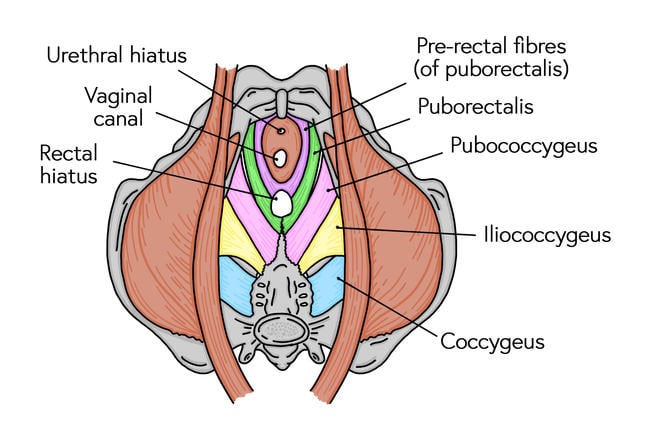
Figure 2.6: ‘Bird’s eye view’ of the pelvic floor muscles of a female.
Levator ani muscles
The main levator ani muscles form the largest component of the pelvic floor, they are innervated by the pudendal nerve S2-S4.
The levator ani is divided into three parts:
-
- Puborectalis is a U-shaped sling, its contraction bends the anal canal and creates the ano-rectal angle (90 degrees) where the rectum meets the anus (we will be looking at this in greater depth in week 4: Bowel function and disfunction bowel continence). Puborectalis is a thick muscle and its main function is to maintain continence. During defaecation it relaxes to straighten the anal canal and allow passage of feaces.
-
- Pubococcygeus muscle controls urine flow and contracts during orgasm. For males it assists in ejaculation and for females it aids in childbirth and core stability. A strong pubococcygeus muscle helps to maintain urinary continence and the proper positioning of the baby’s head at childbirth.
-
- Iliococcogeus muscle – this muscle acts as an ‘elevator’ of the pelvic floor and anorectal canal.
During the second phase of labour the levator ani muscles and/or the pudendal nerve are at a high risk of damage. The Pubococcygeus and Puborectalis are most prone to damage due to their position.
Pelvic floor muscle fibres
Muscles are made up of slow and fast twitch fibres.
It requires the combination of both type 1 red slow and type 2 white fast twitch fibres for the pelvic floor to work.
An understanding of this is important for effective teaching of pelvic floor muscle exercises (which we will be looking at in greater depth in Module 6: Promoting Bladder and Bowel Continence).
Clinical practice points. Differences between fibre types
| Type 1 – red: slow twitch fibres | Type 2 – white: fast twitch fibres |
| Rich in blood supply | Quick reacting |
| Large capillary bed | Work fast |
| Sustains contraction over time, maintains pelvic floor | Fatigue quickly |
| Contracts 10 – 20 times/second | Contracts 30 – 60 times/second |
| Tone is affected by age and trauma (childbirth, heavy lifting, obesity, hormone changes, abdominal surgery) | Contract spontaneously with significant force with an increase in abdominal pressure (cough, laugh, sneeze, jump) in order to equalise the bladder and urethral pressure to maintain continence |
| Strength training exercise: slow pelvic floor contractions give support to the pelvic floor. Slow twitch fibres need to be worked daily to maintain tone | ’The knack’ exercise: fast pelvic floor contraction tightens the urethral sphincter and inhibits bladder contractions |
Inter-relationship between pelvic floor and abdominal muscles
It is important to also understand the interrelationship between pelvic floor and abdominal muscles.
When abdominal muscles are contracted strongly the entire pelvic floor contracts in response. This is known as co-contraction.
This co-contraction is important when assessing the pelvic floor and teaching pelvic floor exercises because abdominal muscle activity can help to indicate pelvic floor activity.
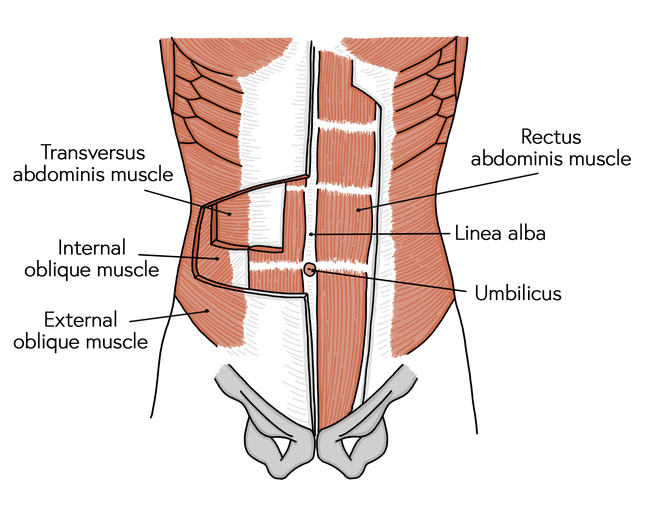 Figure 2.7: Position of the abdominal muscles.
When abdominal muscles are contracted gently the pelvic floor responds in a specific way:
-
- Pubococcygeus contracts with the transversus
-
- Iliococcogeus contracts with the obliques
-
- Puborectalis contracts with rectus abdominis
Your task
The following are all functions of the pelvic floor:
-
- Supports the pelvic organs
-
- Reinforces urethral closure during increased intra-abdominal pressure
-
- Maintains the ano-rectal angle
-
- Provides rectal support during defaecation
-
- Assists in pelvic spinal stability
-
- Contributes to sexual arousal and performance
-
- Maintains continence
-
- Contraction of the pelvic floor inhibits urgency
As a reflective task, think about whether you think one of these functions is more important than the others?