
Welcome to the course
Please note that as of 6th June 2023, the Association for Continence Advice (ACA) has now changed its name to the Association for Continence Professionals (ACP). Some of the videos included in this module will still have the ACA branding, and we can confirm that these videos are still current.
In the video Professor Jo Booth, an active continence researcher, welcomes you to the course ‘Understanding Continence Promotion: Effective Management of Bladder and Bowel Dysfunction in Adults’.
She asks you to start thinking about how we can break down the taboos surrounding bladder and bowel problems and how you can start gaining confidence to talk to others about continence care, encourage them to seek help where necessary and ultimately how to support self-management of continence conditions.
On this course you’ll examine the principles and practice of promoting continence with people who have bladder or bowel dysfunction.
You’ll learn how to recognise and assess the common conditions experienced. You’ll develop the skills to work with adults with different types of continence problems.
You’ll also learn how to create effective management plans to treat the condition, and explore how to minimise the impact of these stigmatising conditions.
By the end of the course you’ll understand how to effectively treat the condition, and support the person to self-manage their condition.
Module Overview
Understanding Continence Promotion: Effective Management of Bladder and Bowel Dysfunction in Adults
- Module 1: Promoting continence or managing incontinence?
- Module 2: Bladder function
- Module 3: Bladder dysfunction
- Module 4: Bowel function and dysfunction
- Module 5: Assessing bladder and bowel conditions
- Module 6: Promoting bladder and bowel continence
- Module 7: Effective bladder and bowel management
Meet the team from the Association for Continence Professionals (ACP)
This course has been created by the Association for Continence Professionals (ACP). The association is a multi-professional membership organisation, open to all health and care professionals working with adults and children, who are working in, or have an interest in, the field of bladder and bowel health.
The main purpose of the ACP is to provide education and support to professionals working to promote continence and effectively manage bladder and bowel health.

Professor Jo Booth is your Lead Educator. Professor of Rehabilitation Nursing at Glasgow Caledonian University, Scotland and an active continence researcher

She is joined by Dr Rona Agnew, Service Manager for NHS Greater Glasgow and Clyde SPHERE Bladder and Bowel Services, Scotland.

Kate Boyce, Bladder and Bowel Specialist Nurse, NHS Greater Glasgow and Clyde SPHERE Bladder and Bowel Service, Scotland.

Janice Reid, Clinical Lead, Western Trust Continence Advisory Services, Northern Ireland.
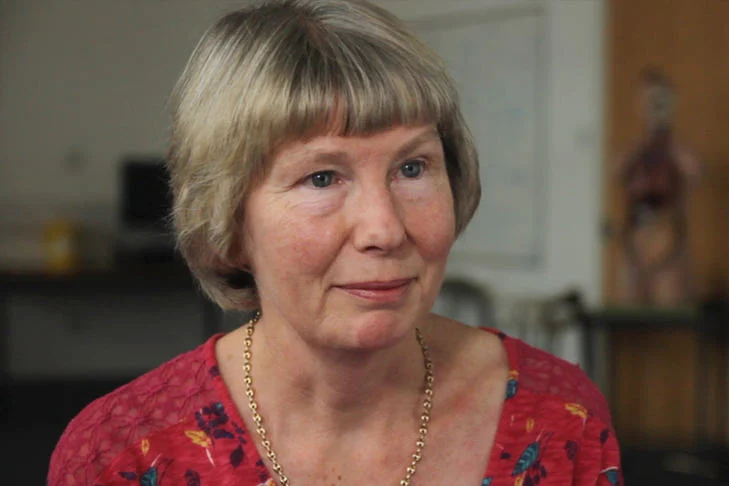
Fiona Saunders, Retired Head of Continence Advisory Service, Nottinghamshire Healthcare NHS Foundation Trust, England.
The team also includes course Host Kate Dickens.
You can follow them by selecting the link to their FutureLearn profile page and selecting ‘Follow’. That way, you’ll be able to see all the comments that they make including course updates and feedback.
What would happen if nobody was interested in promoting continence?
When a person develops incontinence (urinary, faecal or both) there are two possible pathways:
- Try to cure or minimise the condition by finding out what is causing it and treating it – we see this as promoting continence.
- Accept that it has happened and use different products and equipment to contain the leakage – we see this as managing the incontinence.
These two pathways are different.
Your task:
Consider your views about the two pathways and answer the following questions:
- In what ways do you think they are different?
- What do you think the impact would be for the person if there was nobody who was interested in helping them to recover their bladder and bowel function?
- If all that was available was managing the incontinence how would this affect the person’s family?
What are the implications for society of only managing incontinence and not promoting continence?
DISCLAIMER
All content and opinions presented throughout this course are for informational purposes only and do not constitute personal medical advice. If you have any concerns about a particular health condition or the management of it, please seek medical advice from a qualified practitioner or your continence care team. Never disregard professional medical advice or delay in seeking it because of something that you have read on this course.
For health professionals: Please note that the content and opinions presented throughout this course are provided for informational and reference purposes only and do not constitute medical advice. The course is not designed to take into account the individual circumstances of a patient and will not contain all the information you require to treat a patient. As such, it should not be used as a basis for prescribing any drugs or the care of any patient.